Research · 2021–2024
From Invisibility to Evidence: Inclusive Data Collection in the Costa Rican Judiciary
Systematizing the country's first inclusive-data pilot in judicial registry systems.
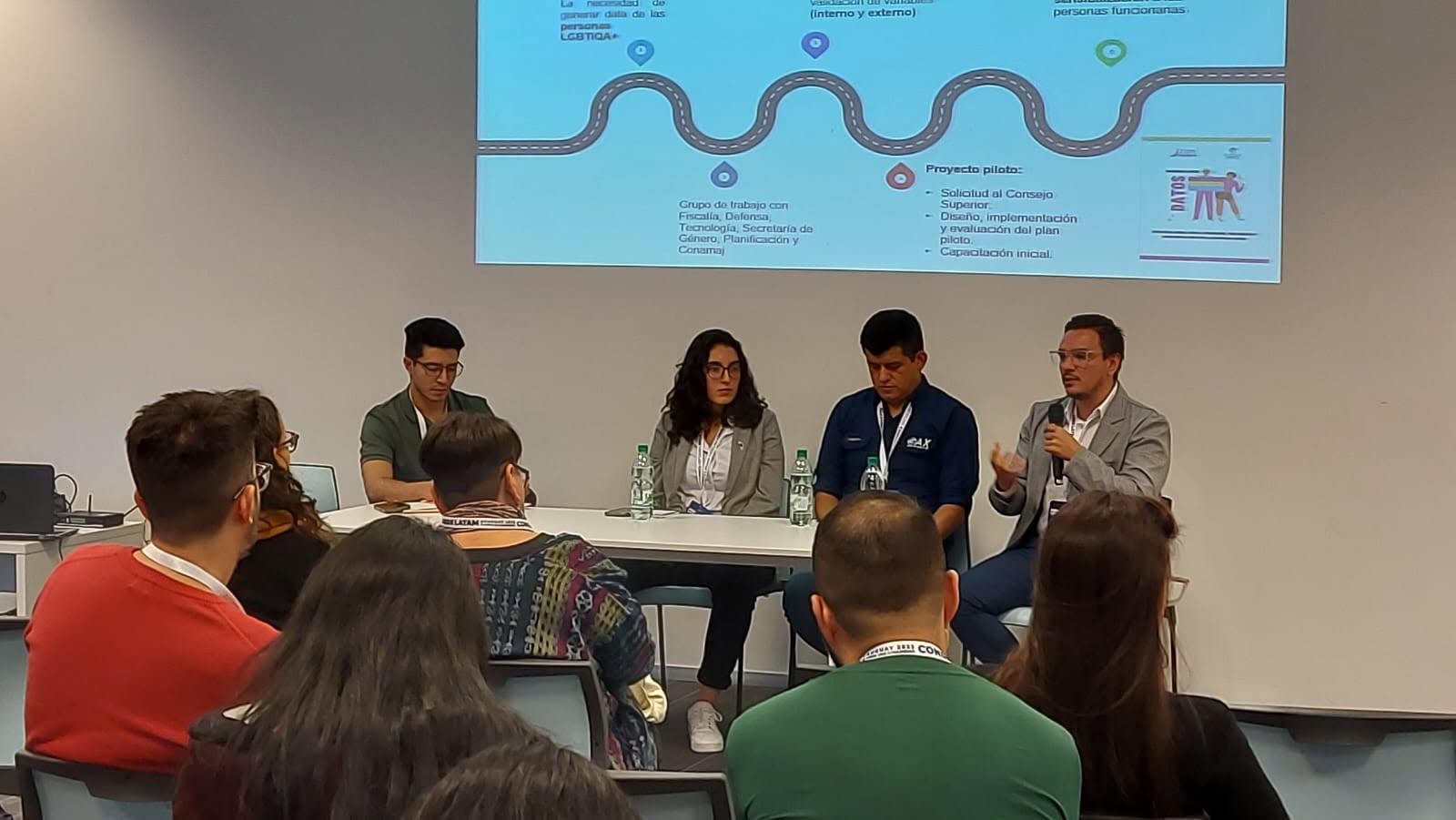
Before this was a paper, it was a policy I designed and helped implement: integrating gender-identity and sexual-orientation data into the Costa Rican Judiciary’s registry and service-delivery systems, an initiative with no regional precedent in judicial institutions. Getting there meant navigating deep ideological tensions: first securing buy-in from a conservative senior leadership structure by building a cross-institutional task force of internal champions, then partnering with Costa Rica’s Defensoría de los Habitantes to bring LGBTQ+ advocacy organizations to the table with the legitimacy the process needed.
Once the pilot was running, deployed across multiple Judicial Branch offices serving over 10,000 weekly users, I wanted the process itself documented as rigorously as the outcome: how do you take an intervention with real ideological friction and turn the process of building it into evidence other institutions can learn from? That’s the paper I’m writing now, forthcoming in CLAD’s Revista Reforma y Democracia. I’m analyzing the experience through Donald Schön’s theory of reflective practice and Óscar Jara’s systematization-of-experience methodology, reconstructing it as three stages: identifying the problem and the institutional conditions that enabled action, the participatory design of the variables with civil society, and the implementation of the pilot.
Building the paper’s argument meant mapping the conceptual frameworks around inclusive data collection and access to justice, and designing a qualitative methodology that triangulates document analysis, records from the participatory workshops, and staff questionnaires from the end of the pilot. The result is a study of process as much as policy: a close look at what it actually takes, methodologically and institutionally, to bring a historically invisible population into a justice system’s data for the first time in the region. If you’d like to read the full draft, you can download it on this page.
Gallery